

What Are the Differences Between Thermal Release Tape, Cool-off Tape, and Hot Melt Sealing Film?
As the names suggest, these three types of functional tapes and films are all sensitive to heat and temperature. They are utilized across a vast range of industrial applications.
Thermal Release Tape
At room temperature, Thermal Release Tape functions like standard adhesive tape. It provides a firm grip to secure a workpiece during specific processing stages. Once these tasks are complete, the tape is heated to a temperature between 85°C and 260°C. At this point, the adhesive strength drops significantly, allowing the workpiece to be removed easily and cleanly.
Cool-off Tape
Cool-off Tape is non-adhesive at room temperature. When heated to a specific target temperature, it becomes tacky and bonds to the workpiece for processing. After the process is finished, the tape and workpiece are simply allowed to cool back down to room temperature. The tape then returns to a non-adhesive state, and the workpiece can be detached.
Hot Melt Sealing Film
Similar to Cool-off Tape, Hot Melt Sealing Film is
non-tacky at room temperature. This material is commonly used for large-scale
bonding of fabrics, non-woven materials, and synthetic plastics. Through a
heat-pressing process, the adhesive melts and creates a bond, either for
permanent lamination or temporary fixation. Once heated and set, the adhesive
strength remains stable and does not fluctuate significantly with changes in
ambient temperature.
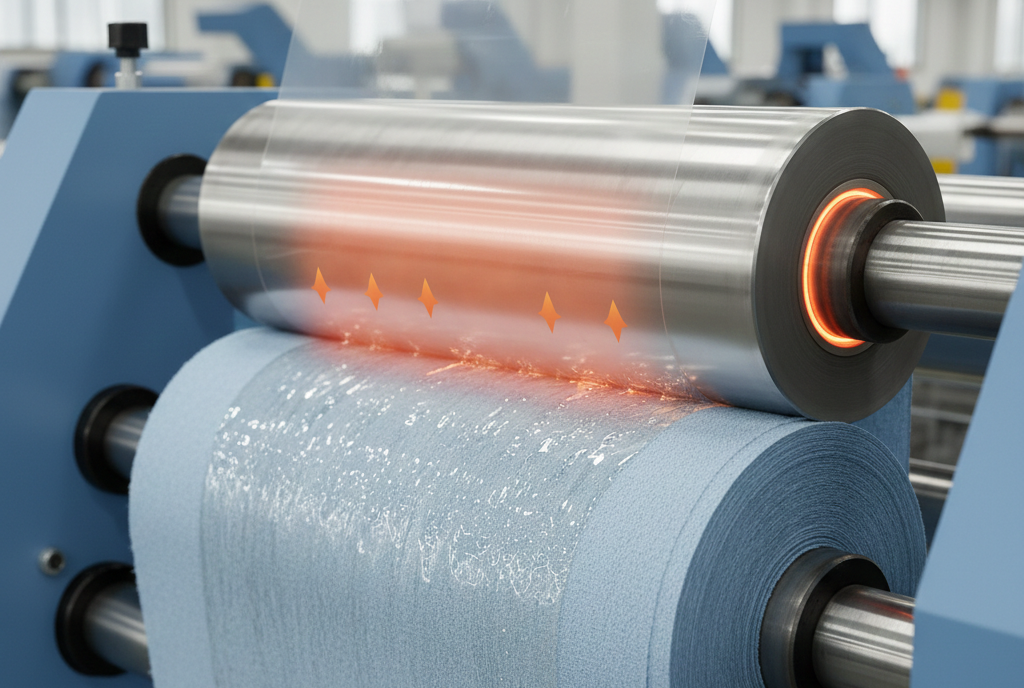
Hot melt sealing film needs hot roller pressing on fabric for bonding - AI graphic
Industrial Applications
Beyond their use in semiconductor front-end and back-end processes, these materials are widely applied in traditional industries.
